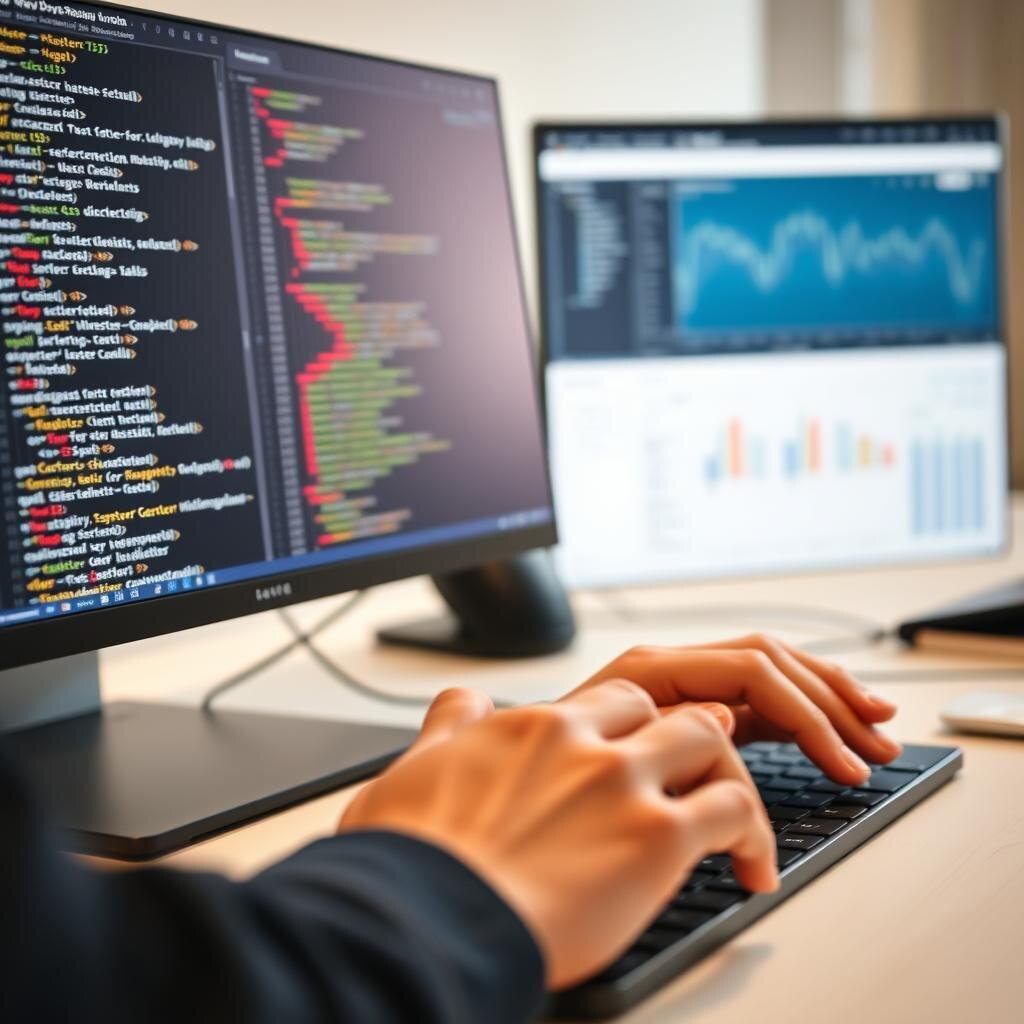
In 2025, Andrej Karpathy coined the term "vibe coding" to describe a new way of building software: describe what you want in plain language and let AI generate the code. By 2026, it is not just a trend — it is how thousands of web apps get built. Tools like Cursor, Claude Code, Bolt, Lovable, and v0 are shipping production applications from prompts, and the pace is accelerating.
The speed is extraordinary. The risk is too.
The New Web App Development Pipeline
A web app founder in 2026 can go from idea to deployed application in a single weekend:
- Day one: Describe the app concept to an AI coding tool, generate the initial codebase
- Day two: Iterate on the generated code, add features, fix AI-produced bugs
- Day three: Deploy to Vercel or Netlify, push to production
What used to require a team of engineers, weeks of sprints, and careful architecture decisions now happens at blur speed. But velocity without verification creates exposure that most founders are not thinking about.
When a vibe-coded app ships with a security flaw that exposes user data, or a logic error that miscalculates pricing, or an AI-generated authentication system that is trivially bypassable, the liability does not belong to the AI tool. It belongs to the person or company that shipped the app.
Why Vibe Coding Amplifies Professional Liability
Professional liability insurance — often called errors and omissions, or in the tech world, tech E&O — responds when your professional services cause financial harm to a client or user. For web app founders, this is the coverage that stands between a lawsuit and bankruptcy.
Vibe coding amplifies this risk in several ways:
Speed Compresses Review Cycles
Traditional development includes built-in review: code reviews, pair programming, QA sprints, staging environments. Vibe coding compresses these cycles — sometimes eliminating them entirely. When a solo founder ships AI-generated code directly to production, there is no safety net.
AI Confidence Masks Real Defects
AI coding tools produce code that reads convincingly. The syntax is clean. The patterns look professional. But beneath the surface, AI-generated code frequently contains subtle logic errors, security vulnerabilities, and architectural mismatches that only careful testing reveals. Vibe coders who skip that testing are assuming risk.
IP Risk Is Invisible Until It Is Not
AI models trained on billions of lines of code can reproduce copyrighted or copyleft-licensed snippets without any visible indicator. When protected code ends up in your web app, the infringement claim comes to you — not the AI vendor.
Contract Risk Compounds
Web app founders who take on enterprise clients or process sensitive data often sign contracts with indemnification clauses, SLA commitments, and compliance requirements. A single AI-generated bug can trigger breach of contract, regulatory violations, and financial liability that far exceeds the project fee.
The Coverage Web App Founders Need
Tech Errors and Omissions (Tech E&O)
This is non-negotiable for any web app handling client data or processing transactions. Tech E&O covers claims arising from software defects, failed deliverables, and professional negligence — exactly the failure modes that AI-generated code introduces.
For vibe-coded apps specifically, confirm that your Tech E&O policy: - Covers AI-generated components without exclusions - Has limits matching your largest contract exposure - Includes coverage for both product failures and service failures - Is written claims-made with a manageable retroactive date
Cyber Liability
When a security defect in vibe-coded software leads to a data breach — exposed user records, a ransomware incident, or a compliance violation — cyber liability covers the response. This includes forensic investigation costs, breach notification expenses, credit monitoring, legal defense, and regulatory fines.
For web apps processing payments, storing personal information, or handling health data, cyber liability is essential regardless of how the code was written.
Media and IP Liability
The fastest-growing coverage need for vibe coders. Media liability responds to intellectual property claims, including copyright infringement from AI-reproduced code. If a licensing scan reveals that your AI coding tool pulled in GPL-protected code and it shipped in your web app, this is the policy that defends you.
General Liability
Most enterprise clients, payment processors, and co-working spaces require a Certificate of Insurance showing GL coverage. It is inexpensive and essential for maintaining business relationships.
Real Scenarios That Trigger Claims
Scenario 1: The Pricing Bug A vibe-coded e-commerce app uses AI-generated pricing logic. A subtle floating-point error overcharges 4,000 customers over two months. The refund demand, chargeback fees, and lost customer trust generate a claim. Tech E&O responds.
Scenario 2: The Authentication Bypass An AI-generated authentication system uses a predictable session token pattern. An attacker exploits it, accessing customer accounts. The resulting breach notification, forensic investigation, and regulatory inquiry generate claims against both Tech E&O and cyber liability.
Scenario 3: The Copyleft Snippet A vibe-coded app ships with an AI-generated utility function that is nearly identical to a GPL-licensed library. The original author discovers it and sends a cease-and-desist. Media liability covers the legal defense and potential damages.
Scenario 4: The Prompt Leak A developer pastes a client's proprietary algorithm into an AI coding tool to generate test cases. The AI provider's systems process and potentially retain that code. The client claims confidentiality breach. Cyber liability and professional liability both factor in.
What Coverage Costs in 2026
For web app founders and small teams:
- Solo founder, basic package (Tech E&O + GL): $1,000 to $3,000 per year
- Small team with cyber (2-5 people): $3,000 to $10,000 per year
- Growth-stage app with enterprise clients: $10,000 to $30,000 per year
- Larger platform with sensitive data: $30,000 to $80,000+ per year
The biggest pricing factor is your contract exposure and the sensitivity of data you handle. A web app processing medical records will pay more than one processing blog subscriptions — but both need coverage.
Vibe Coding Risk Management Checklist
- Review every line of AI-generated code before it ships
- Run automated security scanning on AI output
- Use license compliance tools to check for IP issues
- Implement staging environments — never ship AI code directly to production
- Document your review process for carrier underwriting
- Keep AI tool usage logs
- Align insurance limits to your maximum contractual liability
- Never let coverage lapse between policy periods
Get Covered
Vibe coding made it possible to build web apps faster than ever. It did not make it possible to ignore professional liability. If AI tools are part of how you build and ship software, you need insurance that accounts for exactly that reality.
At Web App Insurance, we specialize in coverage for web app founders and development teams — including those using AI coding tools. Call 844-967-5247 to discuss your app, your AI workflow, and get a coverage plan built for the way you build today.